
The Electric Violin: Then and Now
This list of electric violin luthiers is intended to be an abbreviated, very quick introduction to those who have made a contribution to the evolution and to the art of electric violin making. From first known efforts, to today’s working makers, this list is a chronological, “living document” that will grow as more electric violin luthiers and innovators are introduced to us. The full (but rather short) history of the electric violin is best left to other scholars. It is our hope that this list be used as a springboard for further research by the curious reader. Please share with us improvements and additions that we can make to this list!

Elisha Gray (1835-1901)
1874
Elisha Gray was an inventor from Barnesville, Ohio. His Musical Telegraph was the world’s first electric musical instrument. He began experimenting with the electrification of a violin in 1874, where he installed a metal plate on his violin to receive and amplify the electrical oscillations through the resonating body of the instrument.
Exhibit located in Oberlin, Ohio
Models include: Violin: Electric Telegraph for Transmitting Musical Tones
Website: https://www2.oberlin.edu/faculty/rknight/Gray/Gray.html
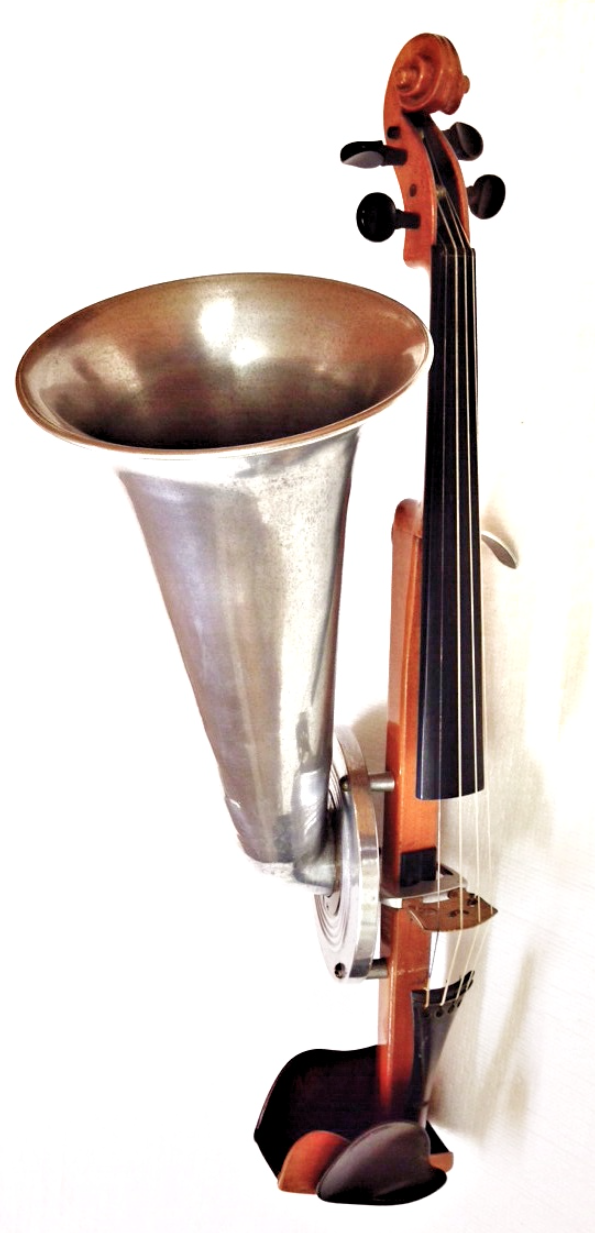
Strohviol
1899 - 1942
The Stroh Violin was invented 1899 by Johannes Matthias Augustus Stroh. Considered a violin with mechanical amplification, and not technically an electric violin, it featured a metal resonator and horn attached to the body. This amplification helped to make the string instruments louder in recordings through the 1920s. It was an early influence on the development of the electric violin.
Located in London, England
Models include: Stroviol
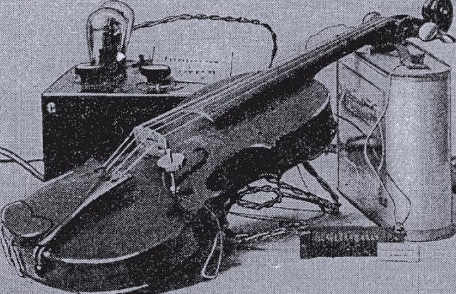
R.F. Starzi (1899 - 1976)
1927
Roman Frederick Starzl developed the Giant Tone Radio Violin in 1927. He attached a pickup to the f-hole of an acoustic violin, making it one of the first known instances of an electric-acoustic or amplified violin.
Located in Le Mars, Iowa
Models include: Violin: Giant Tone Radio Violin
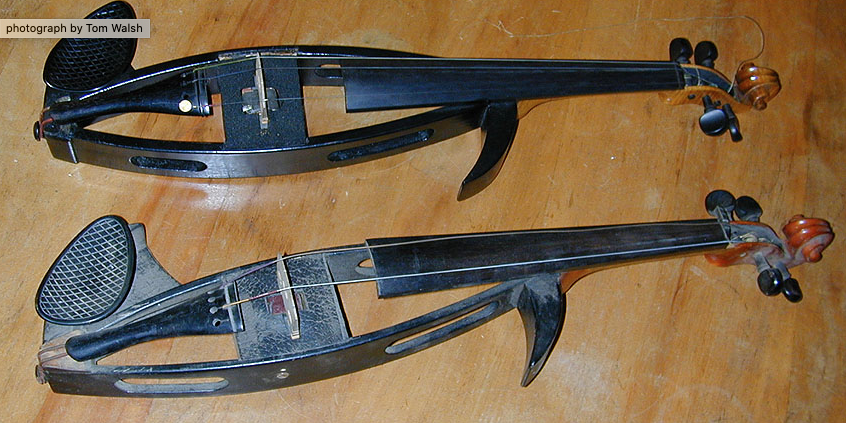
Victor Pfeil (1900-1978)
1928
Victor Pfeil applied for a patent on his electric violin design in 1928. His violin was uniquely shaped with a skeleton frame. The electromagnetic pickup is concealed directly under the bridge.
Located in Orange, New Jersey
Models include: Violin: Electrolin
Website: https://www.metmuseum.org/art/collection/search/503732
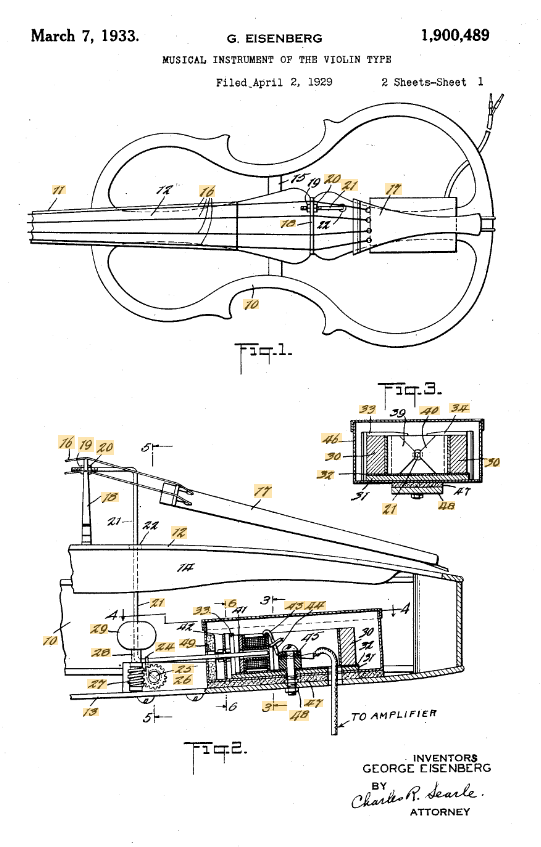
George Eisenberg (1899-1989)
1929
George Eisenberg applied for a patent on his electric violin design on April 2, 1929. The violin’s body was a minimalist compact shape, and the amplification allowed for a strong yet sensitive sound.
Located in Brooklyn, New York
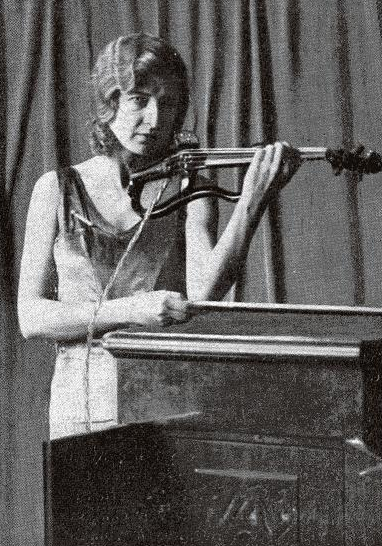
Ivan Makhonine (1885-1973)
1930
On April 12, 1930, the French newspaper L’ILLUSTRATION published an article about a violin designed by Russian inventor and engineer Ivan Makhonine. The image from the article featured violinist Cecilia Hansen playing a violin without a resonating body, connected to an amplifier by a cable.
Located in Paris, France
Models include: Violon electrique
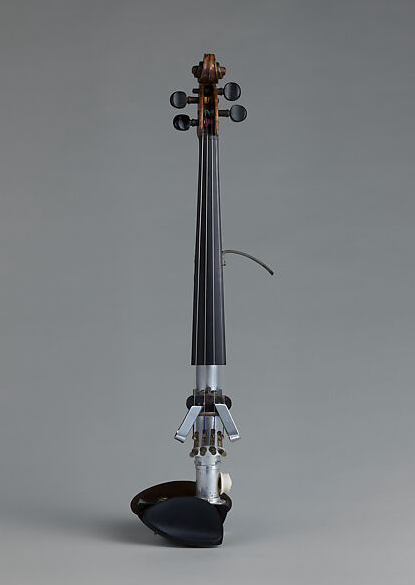
Rickenbacker
1935 - 1939
The Rickenbacker Electro Violin was designed by George Beauchamp in 1935. Originally made from molded Bakelite, later models of the stick-like violin were made from aluminum and wood. The minimal design demonstrated the possibility for change in form and shape of traditional acoustic instruments.
Located in Los Angeles, California
Models include: Violin: Electro Violin
Website: https://www.metmuseum.org/art/collection/search/718382
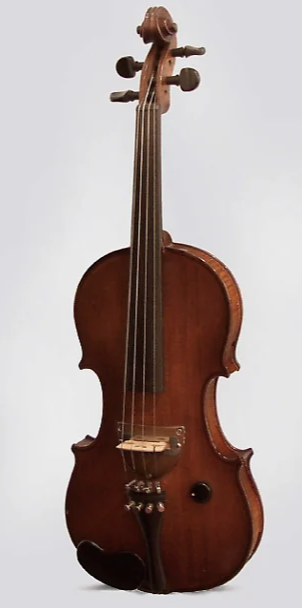
National Vio-Electric
1936-1941
The Vio-Electric was developed in 1936 by John Dopyera for the National Dobro Corporation. These violins were famously played by jazz violinist “Stuff” Smith. The pickup is unique, as the signal is produced by two small magnetic coils.
Located in Chicago, Illonois
Models include: Vio-electric Model, Vio-Lectric Model
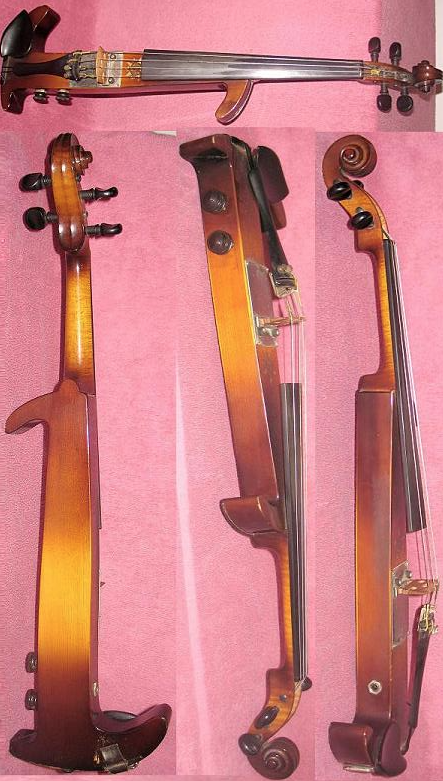
Vega Electric
1939
The Vega Electric Violin was introduced around the 1940s. Violinist Ray Perry of the Lionel Hampton Band is known to have played this instrument, and it is speculated that Stephan Grapelli may have as well.
Located in Boston, Massachusetts
Models include: Violin: Vega Electric Violin
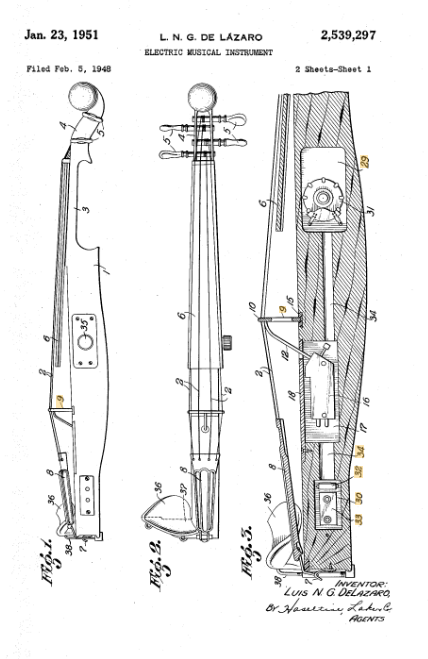
Luis Nicolas Gomez de Lazaro
1947
Luis Nicolãs Gómez de Lázaro was a Spanish inventor and an award-winning violinist. He applied for a patent on his electric violin on February 27, 1947. His goal was to create a violin with a pure sound and the capability for a powerful amplified sound.
Located in Santander, Spain
Models include: Electric violin
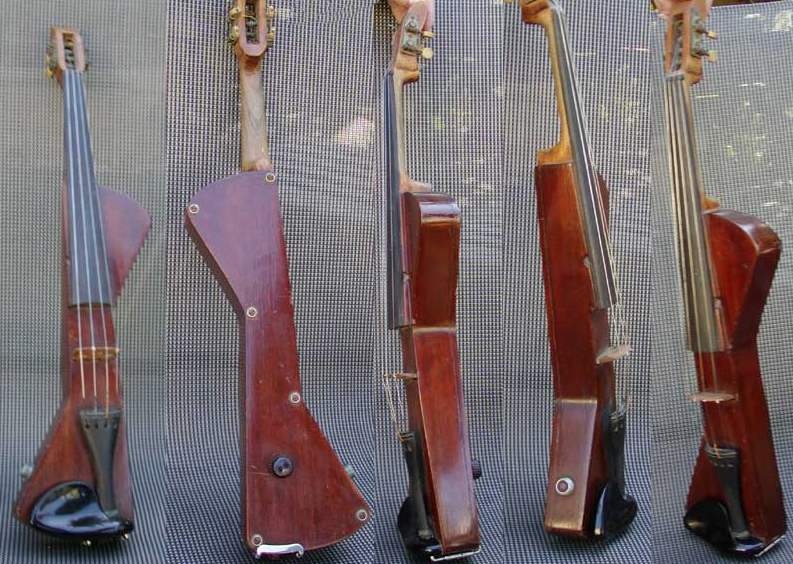
Johanson Electric Violin
1948
The Johanson Electric Violin was made in 1948 by Lynn Johanson for his brother, Eric Johanson. It uses a magnetic phonograph cartridge and a steel needle underneath the bridge to create a direct vibration pickup. This was the first violin made and used in Australia.
Located in Melbourne, Australia
Models include: Johanson electric Violin
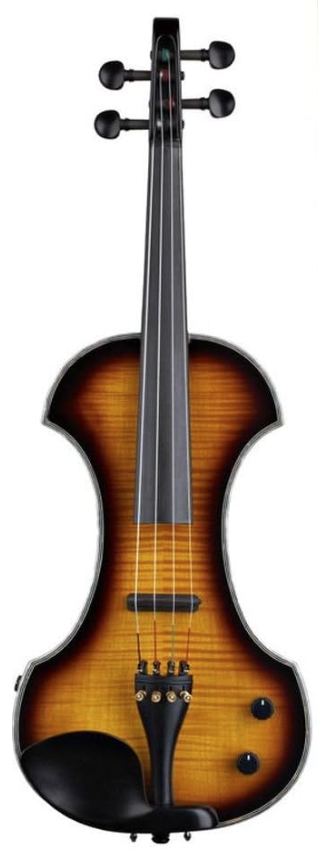
Fender
1958-1959, 1969-1975, 2000-2013
Fender’s electric violin history began in 1958 with Leo Fender’s patent for a solid-body electric violin with a magnetic pickup. However, the initial model was not commercially successful and it was withdrawn from sale by 1959. After Fender was acquired by CBS, the electric violin was reissued in 1969 and produced until 1975. Another reissue was introduced in 2000 and officially discontinued in 2013.
Located in Los Angles, California
Models include: Violin: V-3, FV-1, FV-2
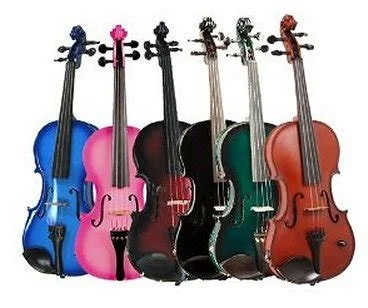
Barcus Berry
1964 - Present
Barcus-Berry was founded in 1964 by audio engineer Les Barcus and violinist John Berry. Together, they created the first piezo crystal transducer pickup for musical instruments, famously played by artists such as Jean-Luc Ponty and Charlie Daniels.
Located in Fullerton, California
Models include: Violin: The Legendary and Vibrato Series. Discontinued models include Violectra and the Barcus Berry Barytone.
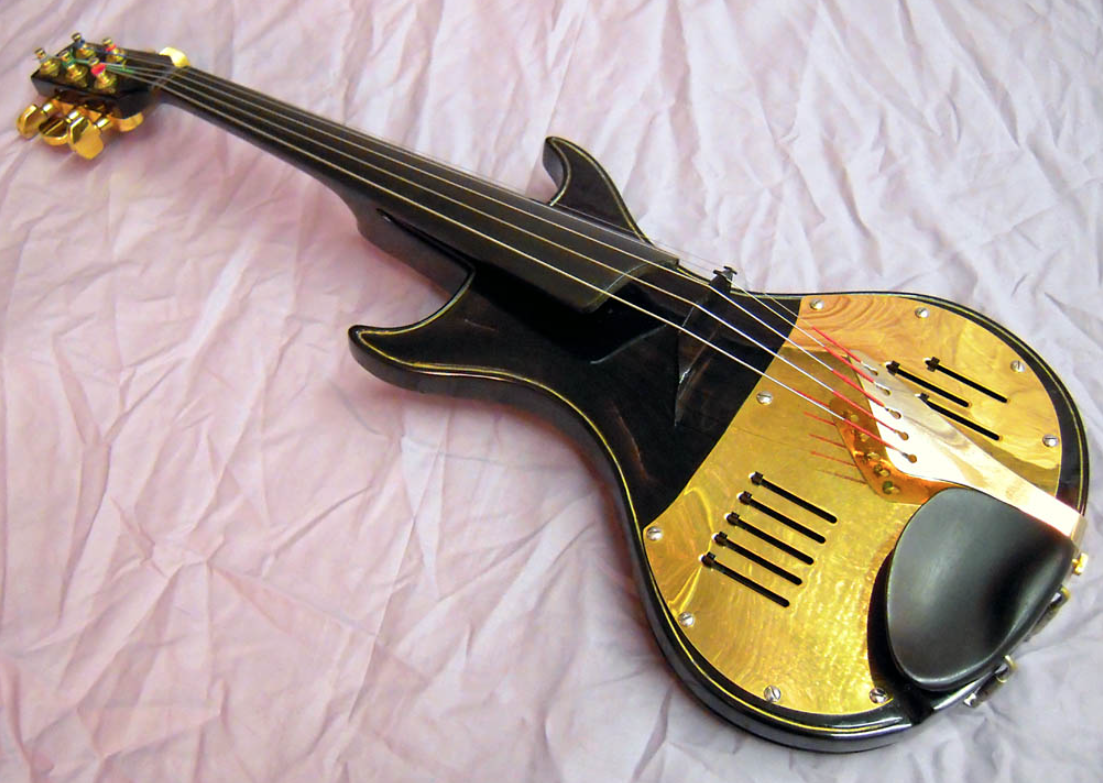
Xinde Corporation
1970 -1972
Spencer Lee Larrison filed for a patent on the Vi-Tar on July 9, 1970 to be manufactured by the Exinde/Xinde Corporation. This is one of the earliest examples of a 5-string electric violin. It is uniquely shaped like the body of an electric guitar.
Located in Boston, Massachusetts
Models include: Violin: The Vi-Tar
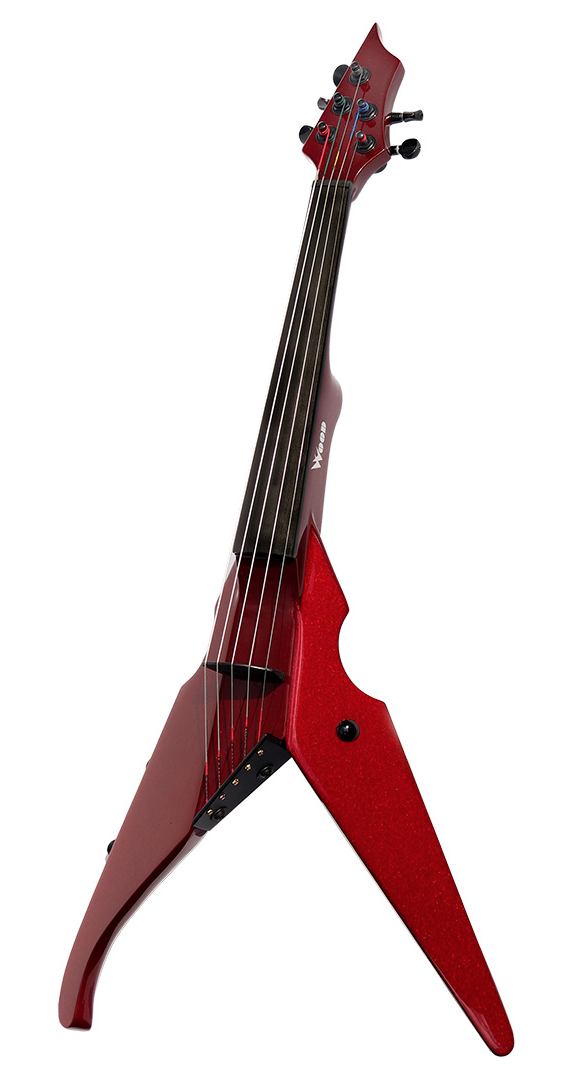
Wood Violins
1972 - Present
Mark Wood is an accomplished musician, whose history spans from Juilliard to the Trans Siberian Orchestra. He first began experimenting with building electric violins in 1972. Since then, he has created a unique collection of electric violins and cellos, most known for the innovative self-supporting holding system, the expansive range of strings, and the option of frets on the fingerboard.
Located in Tuscon, Arizona
Models include: Violin: The Viper, The Stingray, The Nashville. Cello: The Cobra, The King Cobra
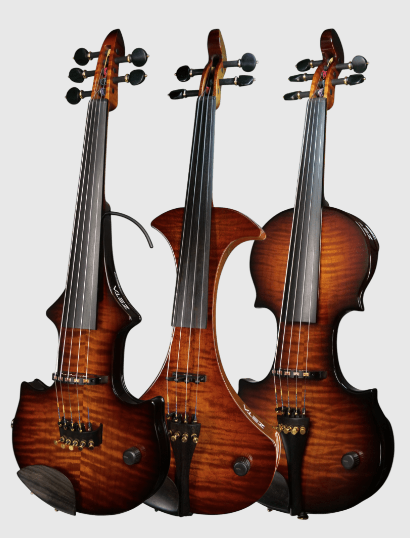
Zeta
1978 - 2010, 2012 - Present
ZETA was founded in the late 1970s in California by Keith McMillen and Richard McClish. Jean-Luc Ponty popluarized the Jazz Fusion model in the mid-1980s. The company was acquired by Steve Carlson in 2012, who relocated the company to Montana and added his mandolin and Gibson Guitar expertise to the ZETA brand.
Located in Belgrade, Montana
Models include: Violin: Jazz Imbus, Jazz Fusion, Strados Jazz Modern, Strados Jazz Classic, Acoustic/Electric Pro. Viola: Jazz Modern Cremona Burst, Jazz Modern Natural. Cello: Strados Fusion Roasted Flame, Strados Fusion Flame Maple, Strados Fusion Legacy Wine
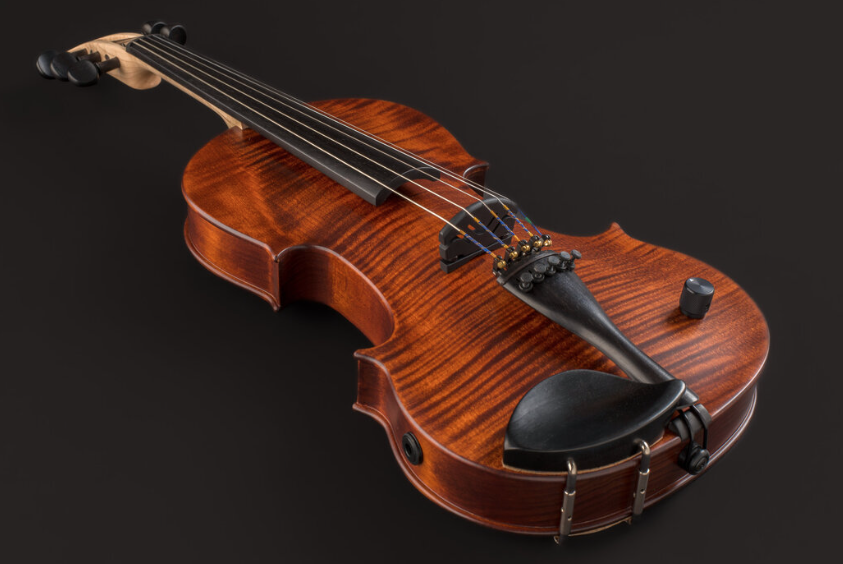
Maloney Stringed Instruments
1979 - Present
Dan Maloney has been a luthier since 1979, making electric guitars, basses, and violins. For many years, he was the lead luthier at Zeta Music, where he designed the Modern body. Boyd Tinsley (of the Dave Matthews Band) plays an MSI violin.
Located in El Sobrante, California
Models include: Violin: MSI Renaissance semi-hollow 4-String, MSI Renaissance semi-hollow 5-String, MSI Modern 5-String
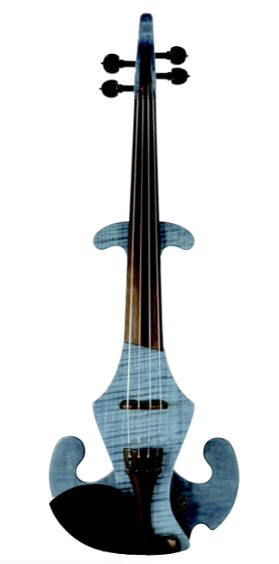
Vector Instruments
1983 - Present
Vector Instruments was founded in 1983 with the goal of bridging the gap between classical tradition and modern technology. Each instrument is handcrafted in Lincoln, Nebraska, by a small team of trained violin makers. Vector’s electric violins offer a comfortable feel, quality acoustic sound, and remarkably lightweight design.
Located in Lincoln, Nebraska
Models include: Violin: Vector Prodigy, Vector Prodigy Elite, Vecor Omega, available in 4-,5-, and 6-strings, sizes 1/2, 3/4, 4/4, 15.5”viola

Jordan Violins
1987 - Present
Prior to making his first electric violin in 1987, John Jordan made and worked on guitars and other string instruments for 10 years. He was granted a U.S. patent for his electric violin in 1992, and it quickly became featured in several live performances across the globe. Jordan’s violins feature a superior balance, ergonomic function, and master craftsmanship.
Located in Concord, California
Models include: Violin: 4-String, 5-String, 6-String, 7-String. Viola: Jordan Electric Viola. Cello: The Ariel Model Electric Cello, The Virage Model Electric Cello. Bass: Jordan Electric Upright Bass (5-String)
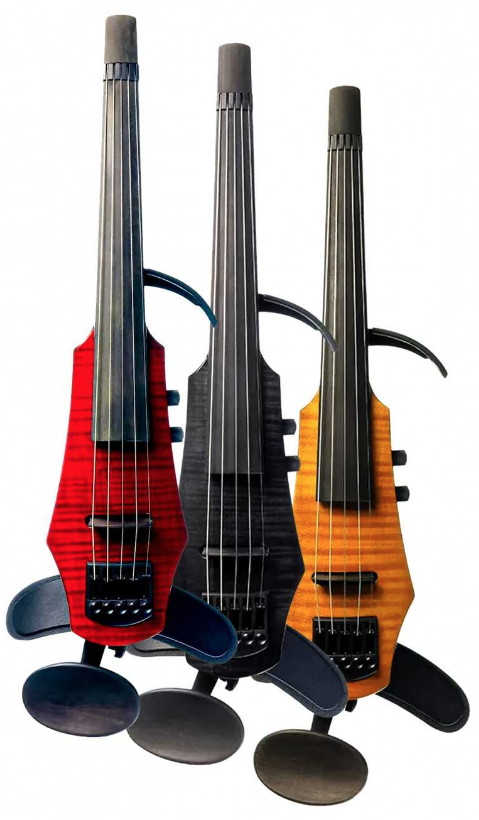
NS Design
1990 - Present
NS Design was founded in 1990 by Ned Steinberger, with his primary focus bring bowed instruments. Steinberger strives to set his electric string instruments free from the confines their acoustic predecessor, with an innovative and modern design.
Located in Nobleboro, Maine
Models include: Violin: CR Series, NXTa Series, WAV Series. Viola: CR Series, NXTa Series, WAV Series. Cello: CR Series, NXTa Series, WAV Series. Bass: CR Series Omni Bass, NXTa Series Omni Bass, WAV Omni Bass, EU Series Upright Bass, CR-M Series Upright Bass, CR-T Series Upright Bass, NXTa Series Upright Bass
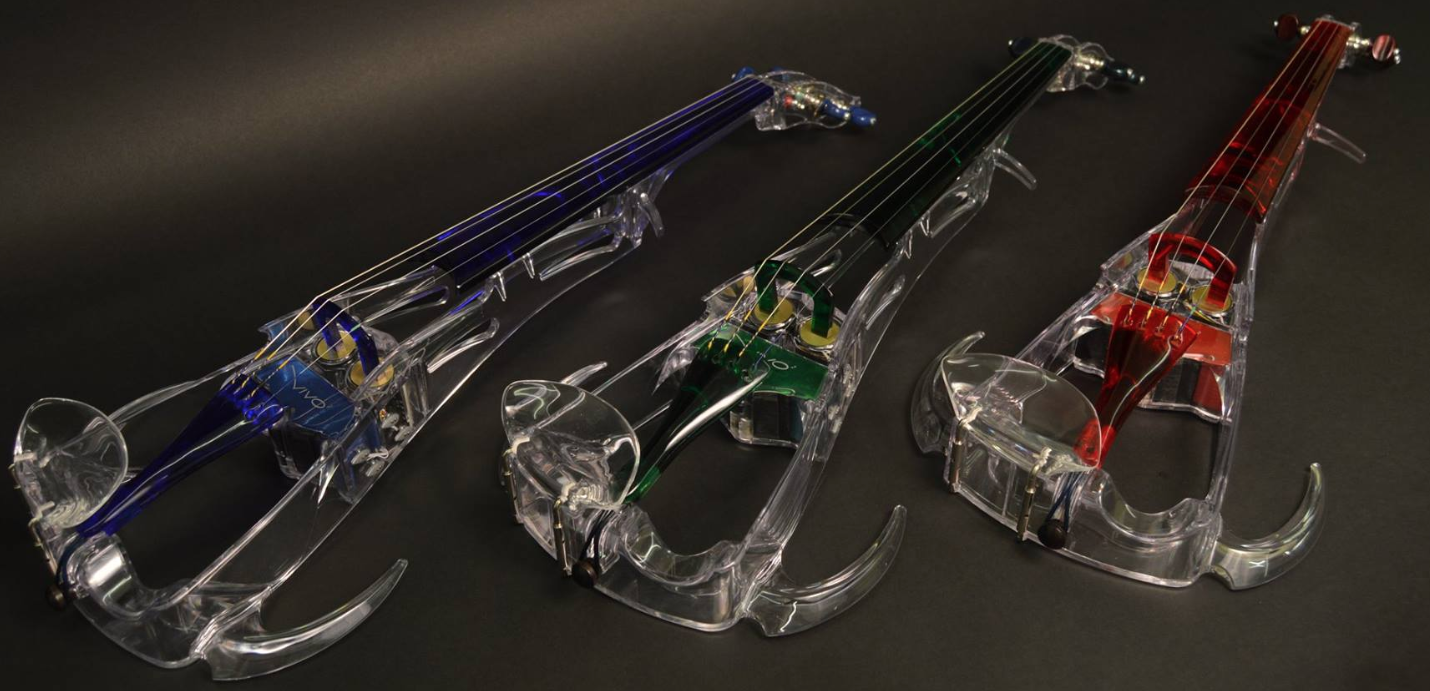
Ted Brewer Violins
1993 - Present
Ted Brewer began making electric violins in 1993, experimenting with shape and materials. In 2001, Vanessa Mae commissioned a sculpted acrylic electric violin. Brewer’s acrylic violins have received awards for their design and are known for their excellent sound and visual impact.
Located in Lincoln, England
Models include: Violin: The Vivo Air, The Vivo Air Spectrum, The Vivo2 Red, The Vivo2 Blue, The Vivo2 Green, The Vivo2 Black, The Crossbow, The Hades
Aurora
1997 - Present
Aurora violins are the creation of brothers Mauricio and Gilberto Brazolim. They started making custom electric guitars and basses in 1982, and they began experimenting with electric violins in 1997. Their first line of violins with state-of-the-art acrylic technology was introduced in 2009.
Located in Brazil
Models include: Violin: The Classic, The Jewellery Classic, The Wood Series, The Silhouette. Cello: The Aurora Cello
Cantini
1997 - Present
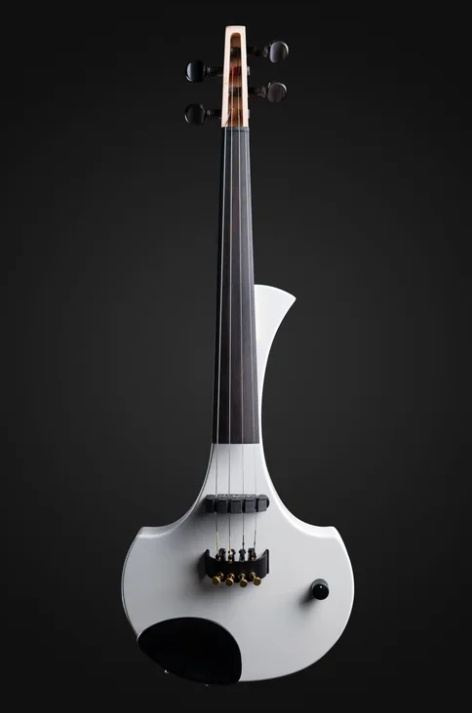
Carlo Cantini began making electric violins in 1997 in northern Italy. They are made using CNC machines and a multi-step painting process. Cantini assembles, tests, and plays each violin himself.
Located in Mantua, Italy
Models include: Violin: The E-Acoustic, The Earphonic, The Sonplus Reb.
Sten Styrelius
1997 - Present
Experimented with contact microphones in wood in 1990, creating an electric violin in 1997. Worked with Jens Elfving to create the Elvari Electric violins in 2013.
Located in Stockholm, Sweden
Models include: Styrelius Electric Violin
Yamaha
1997 - Present
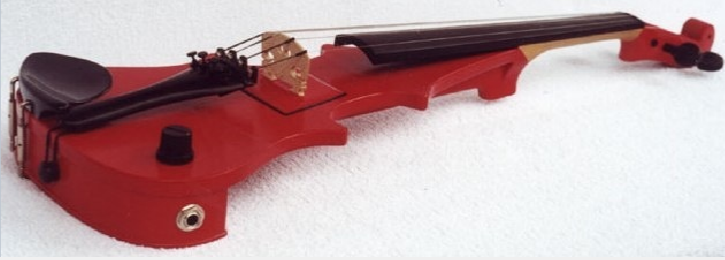
Yamaha’s 1997 debut electric violin was designed originally as a silent practice violin that could be listened to through headphones. When the SV-100 arrived in the United States, players began amplifying the silent violins. Today, artists such as Lindsey Stirling, Hauser, and Leah Zeger use Yamaha electric string instruments.
Located in Buena Park, CA
Models include: Violin: YSV104, SV-250/SV-255, SV-200, YEV104/YEV105, YEV104PRO/YEV105PRO. Viola: SVV200. Cello: SVC300C, SVC300F, SVC-210SK, SVC-110SK, SVC-50. Bass: SLB300/SLB300PRO, SLB-300LTD, SVB-200 (Discontinued), SVB-100
Website: https://usa.yamaha.com/products/musical_instruments/strings/index.html

E.F. Keebler
2000 - Present
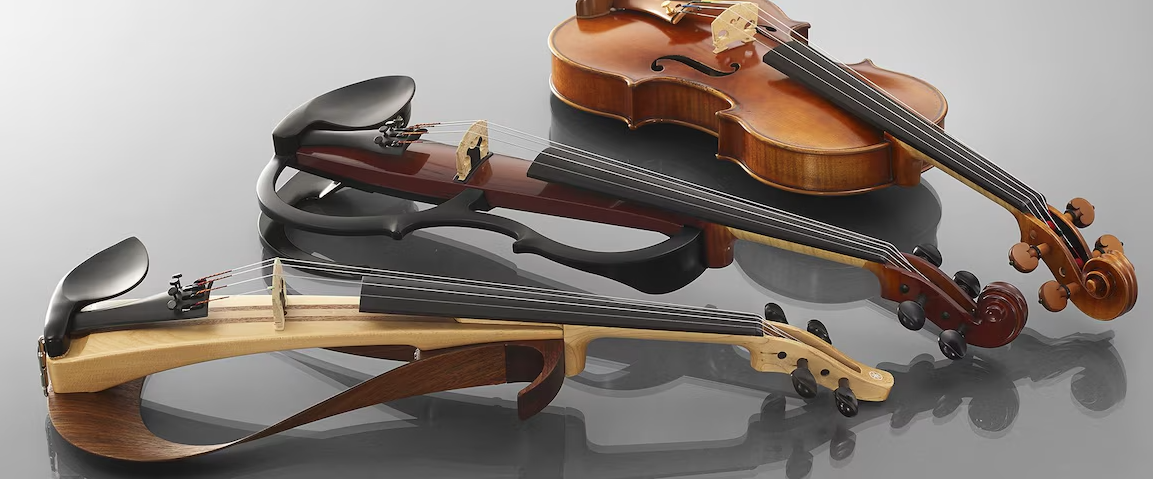
Eric F. Keebler began making electric violins and violas in 2000. His goal was to create a pickup system with a true acoustic sound that did not require a preamp or EQ. Keebler instruments are played by musicians on every continent except Antarctica, and each instrument is made completely by Keebler himself.
Located in Wyomissing, Pennsylvania
Models include: Violin: The Filament, The WARHORSE, The Tubular Electric Violin
Reiter
2005 - Present
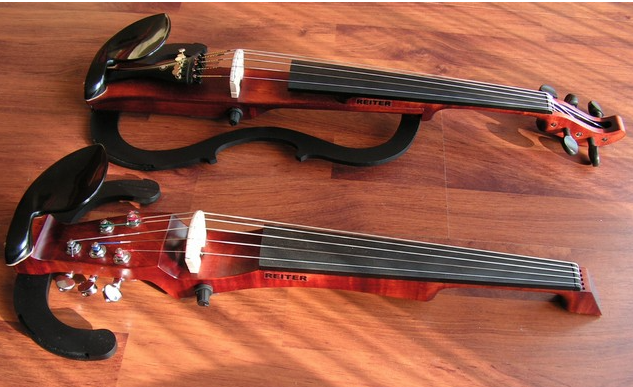
Tomáš Reiter has been making electric violins, violas, and cellos since 2005. His violins are crafted from maple, and they can have up to 8 strings.
Located in Ostrava, Czech Republic
Models include: Violin: The Alien, The Classic, The Easy. Viola: The Alien, The Easy. Cello: The Alien
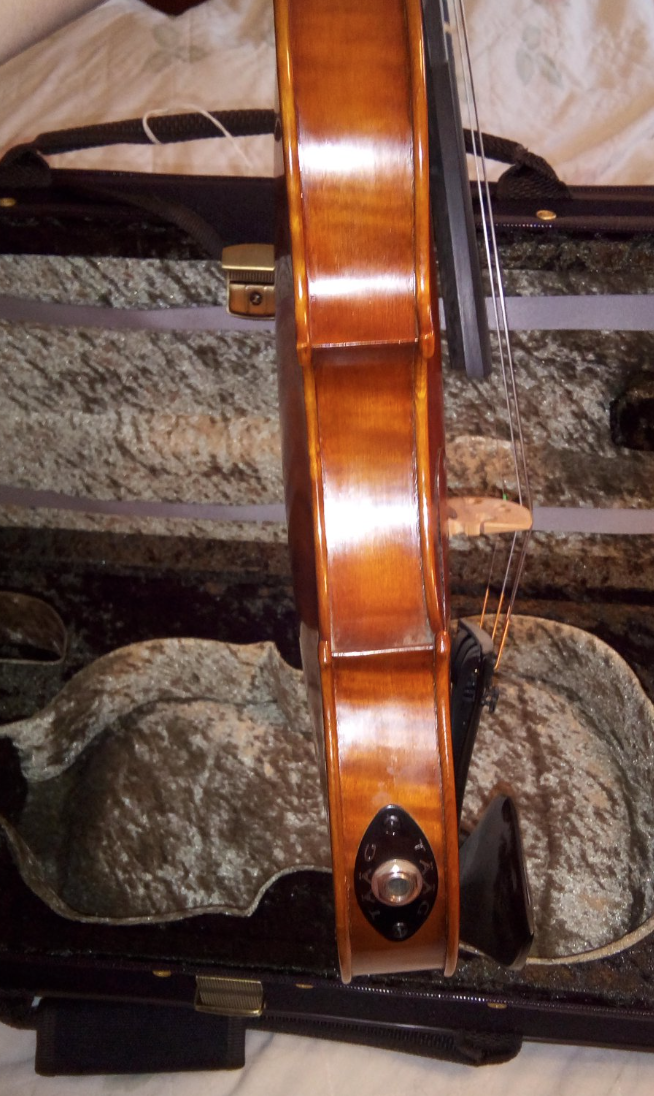
TAAG
2006 - 2008
Troy Gibson acoustic electric violins feature an internal Schatten pickup that was designed specifically for TAAG (Troy Gibson Luthier Acoustic/Electric Guitars/Violins) acoustic/electric violins. The pickup system was installed on different levels of acoustic violins, amplifying their natural tone with amazing results.
Located in Nashville, Tennessee
Models include: Violin: Signature Series, Workhorse TAAG
Wind Fiddles
2007 - Present
Al Patterson began making electric violins around 2007 in high school with his father. His Wind Fiddles feature an ergonomic design, clean look, and light weight. The violins are made from cherry, walnut, ash, or maple, and they have a rich, fat amplified sound.
Located in Chesapeake, Virginia
Models include: Violin: 4-String, 5-String

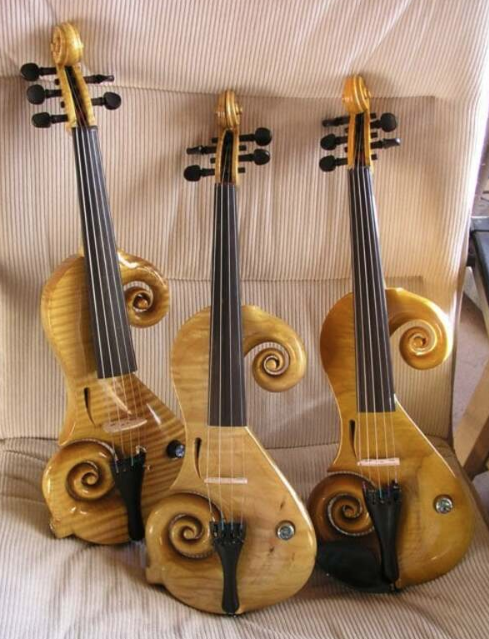
Liquid Violins
2009 - Present
Brandon MacDougall is the founder and builder of Liquid Violins. He has over 15 years of experience making customized violins with a truly unique design. Liquid Violins are proudly played by artists like Taylor Davis and Mia Asano.
Located in Ojai, California
Models include: 4-String, 5-String, Custom Colors
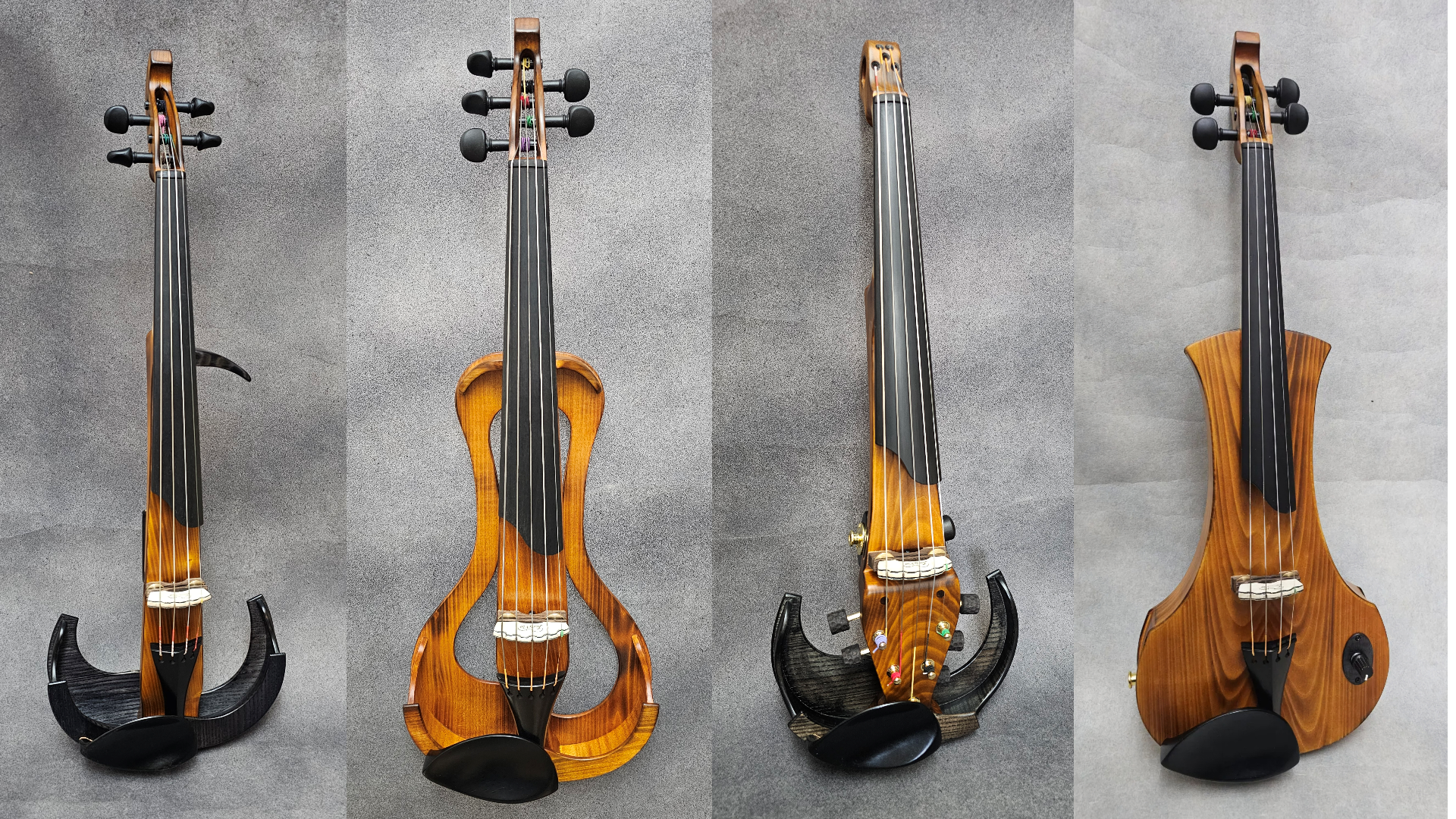
Fortevio
2010 - Present
Fortevio was founded in 2010 by Valentin Hristov. He combined his carpentry expertise with his love for the violin, choosing the name “Fortevio” to mean “strong violin.” His violins include a uniquely patented passive electro-acoustic piezo pickup, allowing for a similar tone and playability to acoustic violins.
Located in London, England
Models include: Violin: 4-String Acoustic-Electric with Fortevio scroll, 4-String Acoustic-Electric with standard scroll, 5-String Acoustic Electric, The Bone, The Eleganto 5, The Feather, The Feather Classic, The Feather Classic with LED, The Mantis, The Mantis Classic, The Mantis-G, The Skinny Mantis-G, The Spirito
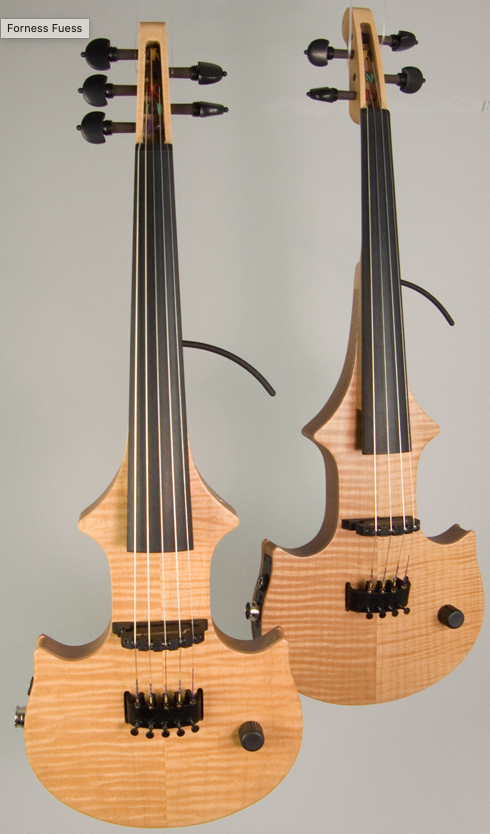
Fourness Violins
2010 - Present?
Evan Fourness is the former head luthier for ZETA Music Systems. He currently offers repair services for electric stringed instruments, with expertise in electronics and pickups.
Located in Chandler, Arizona
Models include: Fourness Fuse Violin
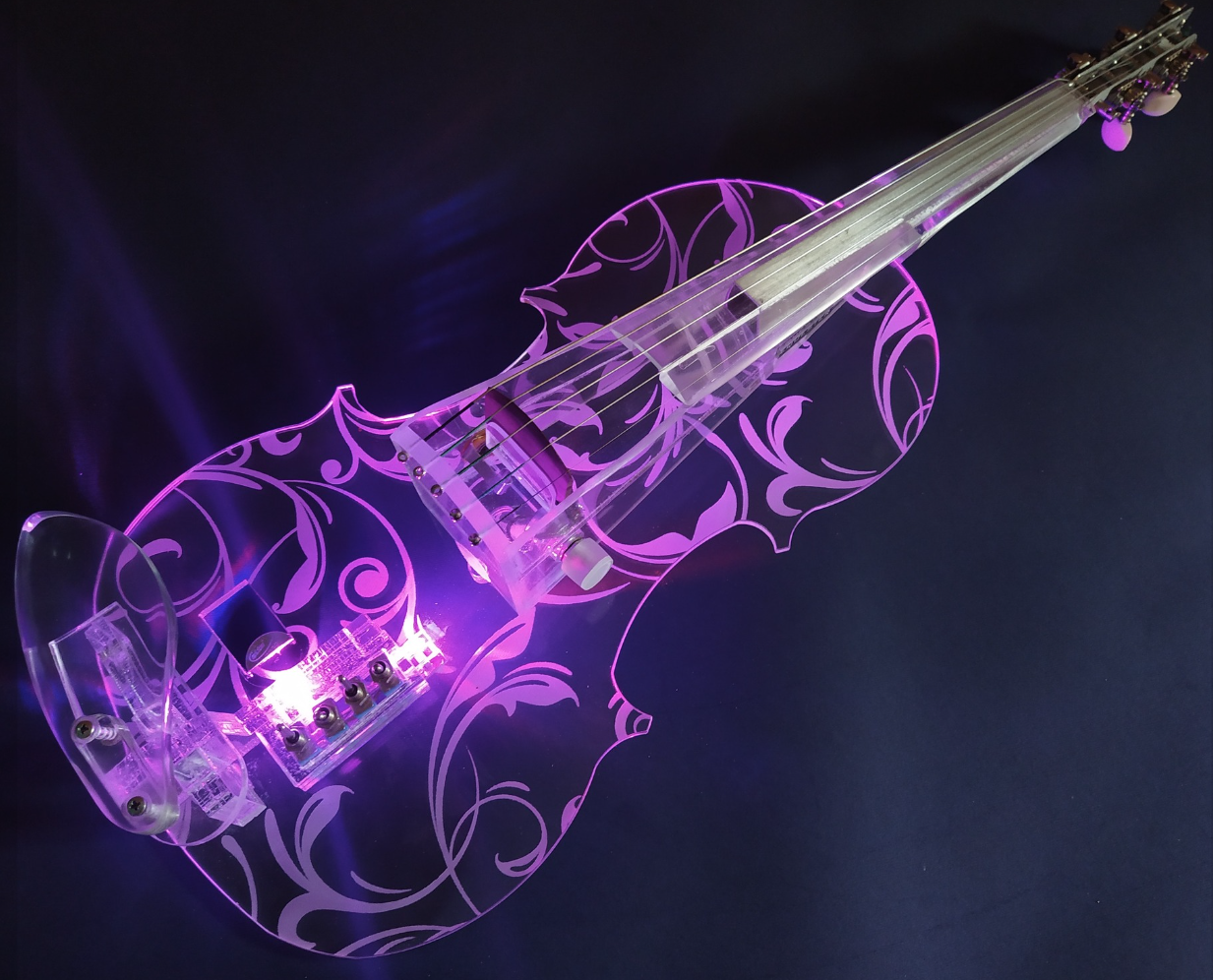
Equester Violins
2011 - Present
Ireneusz Equester Makowski began making electric violins in 2011. His violins feature an acrylic, transparent design, often with LEDs.
Located in Chorzów, Poland
Models include: Violin: The Viro, The Winter Night, The Aurum, The Spark of Wonder, The Equester Butterfly, The Equester Gamma, The Equester Sigma Celtic, The Equester Sigma Vines, The Vilux, Composite Acoustic, Acrylic Composite. Cello: The Viro
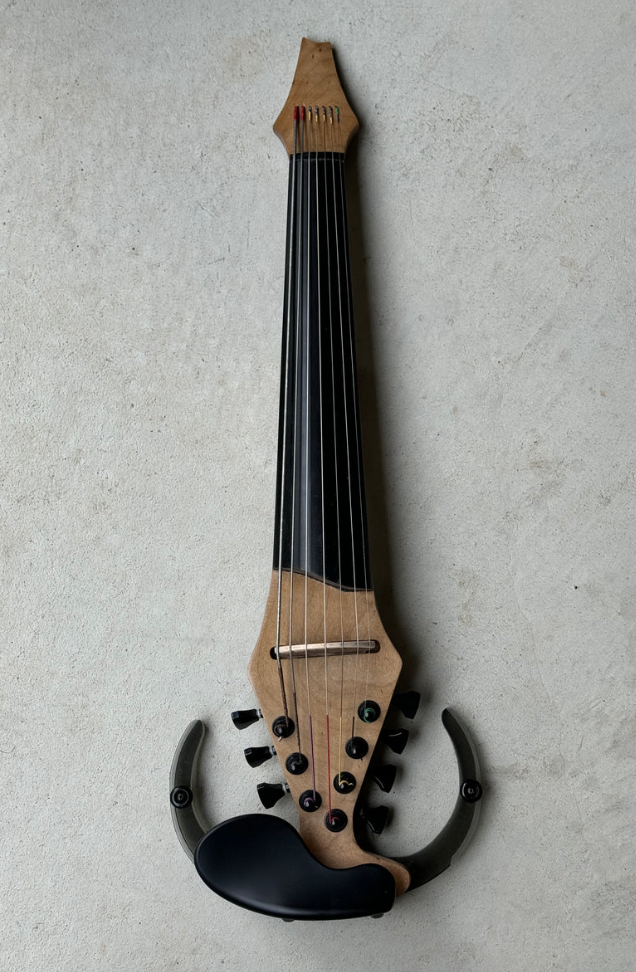
EVL
2011 - Present
The Electric Violin Luther was founded in 2011 in Buffalo, New York. Originally formed to create affordable electric violins that felt natural and sounded even better, EVL is now known for their customizable electric violin models.
Located in Williamsville, New York
Models include: Violin: The Quartet Series, The Dragonfly Series, The Dragonfly Blondie, Acoustic Electric Carbon Fiber Violins.
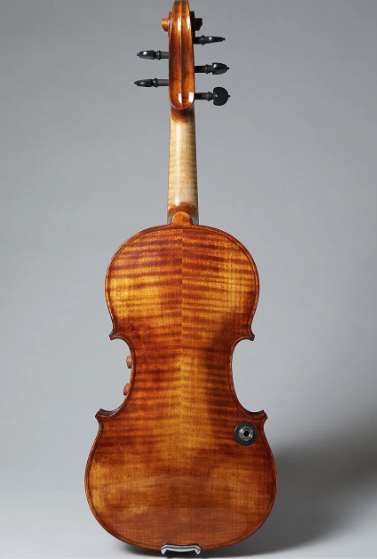
Realist Violin
2011 - Present
The Realist double bass pickup was developed in the late 1990s by luthier David Gage and designer Ned Steinberger. The technology was later adapted for other acoustic instruments, including cello, violin, viola, mandolin, and banjo. They have recently developed a high-quality acoustic-electric violin that offers a fine, traditional sound with a discreet electric capability.
Located in New York, New York
Models include: Violin: RV4PeFA Pro Acoustic-Electric Violin, RV-5e Acoustic-Electric Violin, RV5PeFA Pro Acoustic-Electric Violin, RV-4e Acoustic-Electric, RV4PeBA Pro Acoustic-Electric Violin, RV5PeBA Pro Acousticl-Electric Violin
Website: https://www.metmuseum.org/art/collection/search/503732
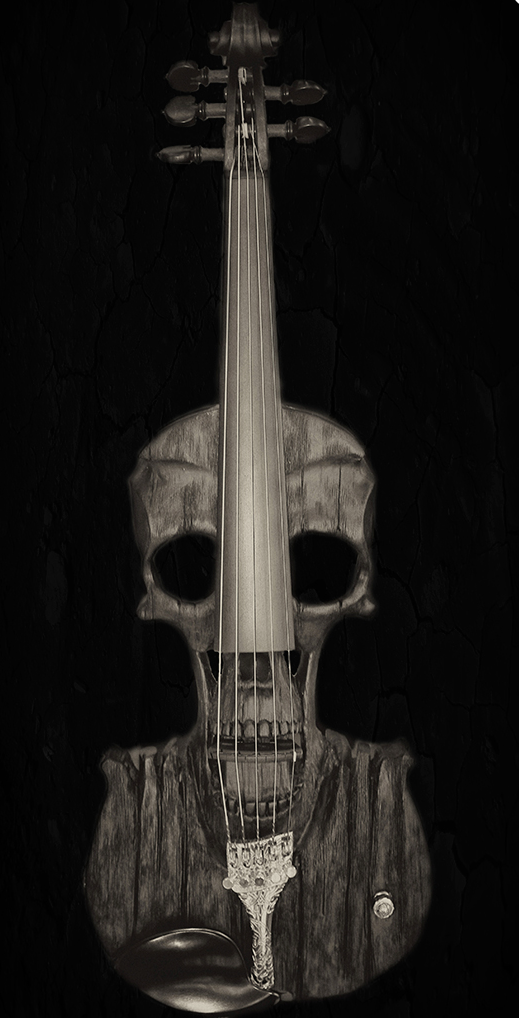
Stratton
2012 - Present
Jeff Stratton began making electric violins in the early 2000s. Originally from Ohio, he moved to Bulgaria with his wife and set up his personal workshop. Stratton violins are hand carved and uniquely designed, with the most recognized being his Skull violins.
Located in Varna, Bulgaria
Models include: Violin: Semi-Custom, Standard, Gypsy, Kiril Petrov, Robert Kantor
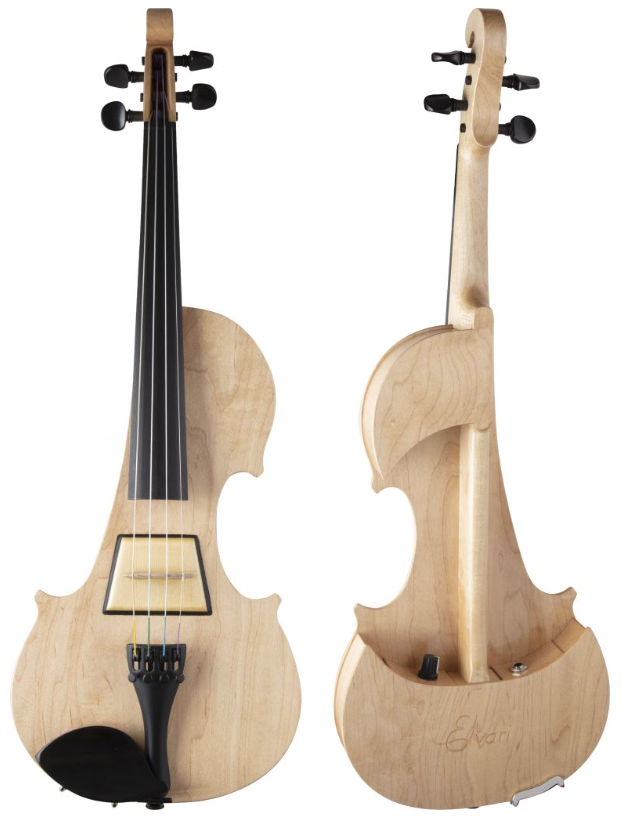
Elvari
2013 - Present
Jens Elfving originally began Elvari at the Royal Danish Academy of Music in 2012 as a master project, with the goal of making an electric violin with a professional playability. In 2013, Elfving contacted violin maker Sten Styrélius in Stockholm, who had developed a unique pickup system in 1997. With the two designs married, Elvari violins have a lightweight design with a powerful acoustic tone.
Located in Vasteras, Sweeden
Models include: Violin: 4-String and 5-String
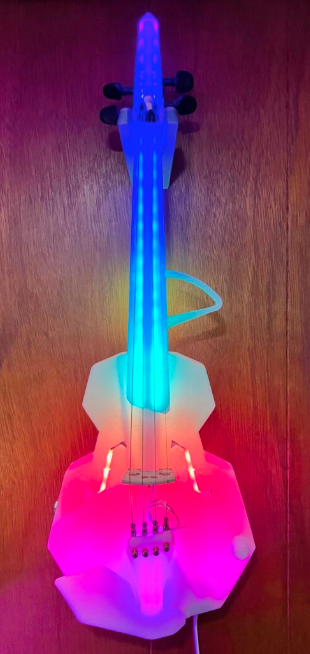
OpenFab
2013 - Present
OpenFab was founded by mechanical engineer David Perry. He designed his first 3D printed electric violin in 2013. His Modular Violins, designed in 2018, are made to be easily repaired, upgraded, and personalized.
Located in Portland, Oregon
Models include: Violin: Strata 4-String, Strata 5-String, Strata Glow 4-String, Strata Glow 5-String, Modular 4-String, Modular 5-String
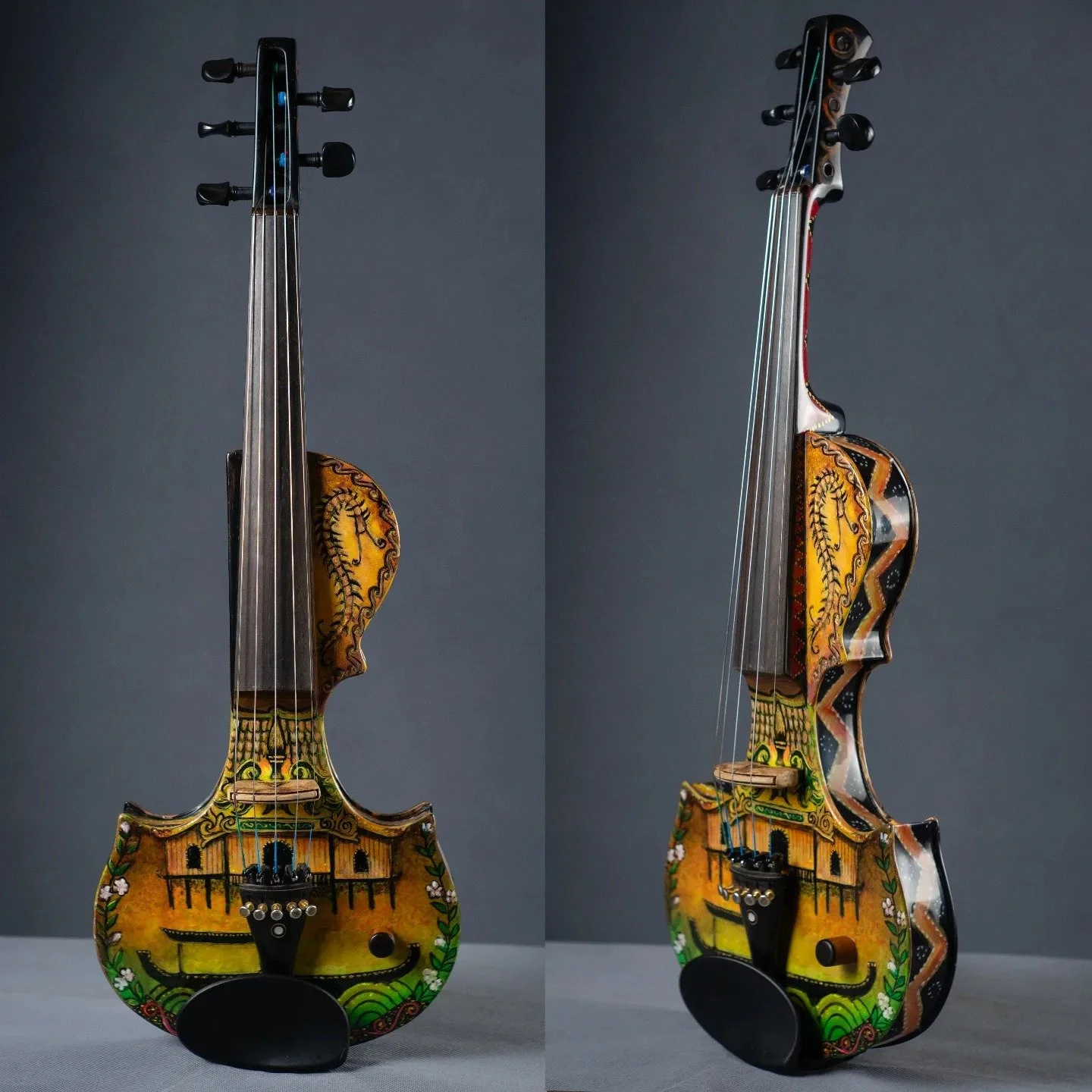
AEYRA Violin
2014 - Present
AEYRA Violin was founded in 2014 by Yuli Aeyra. Their electric violins are handcrafted in Indonesia and are known for their customizations, such as the hand-painted designs of the Nusantara series.
Located in Banjarmasin, Indonesia
Models include: Violin: The Scorpio Series, The Nusantara Series, The Amboyna Burl Series, The Hollow Body Series, The Solid Body Series
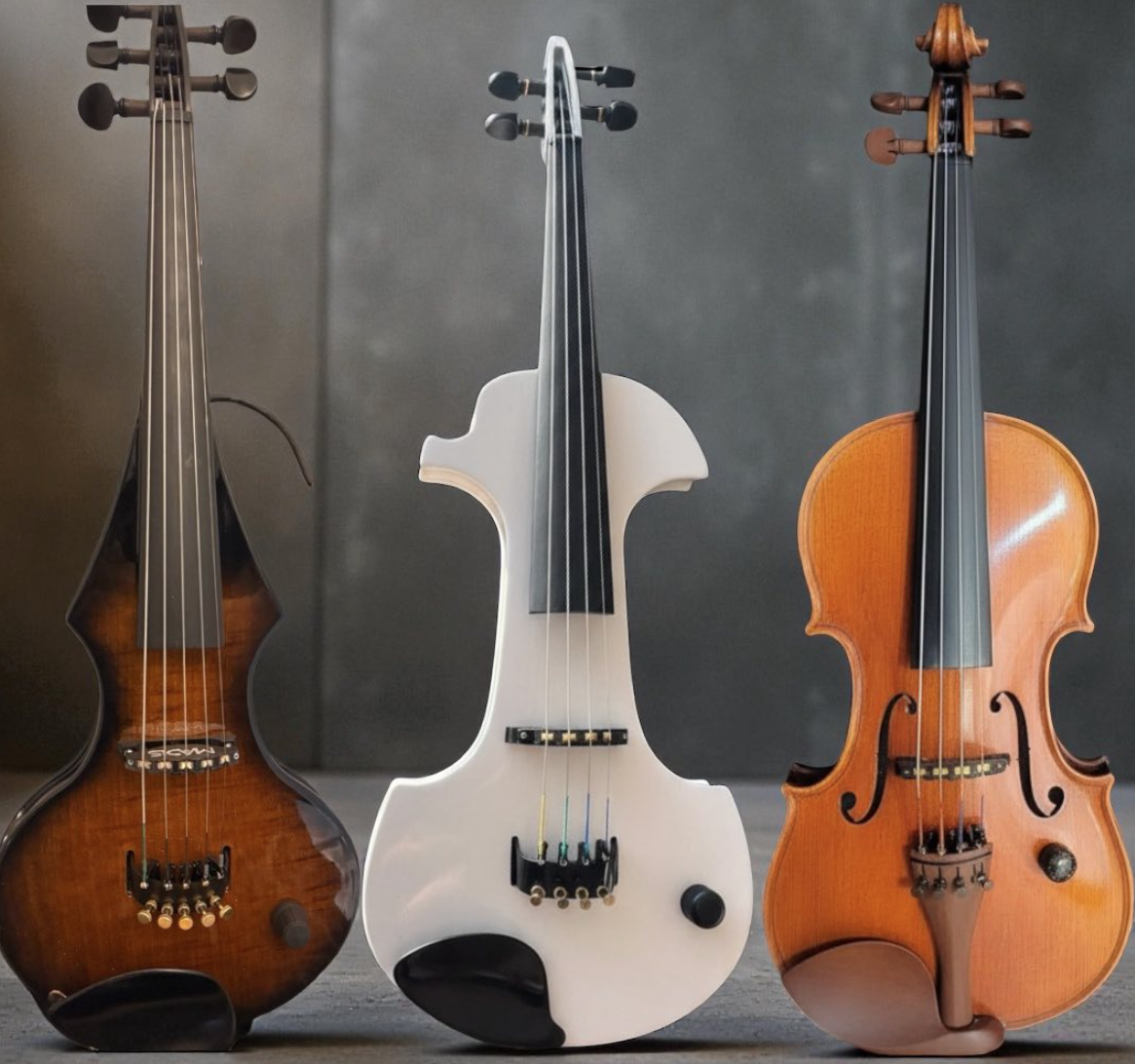
Madis Midi Electric Violins
2015 - Present
Madis Violins was created in 2015 by violinist Banica Madalin. The piezo pickups allow for a clear tone with well-defined nuance.
Located in Romania
Models include: Violin: Madis Classic, Acoustic-Electric 4-String, Acoustic-Electric 5-String, Madis Del Gesu, Madis Jazz 4-String, Madis Jazz 5-String, Madis Luxury 4-String, Madis Luxury 5-String
Website: https://www.facebook.com/profile.php?id=100057663451102
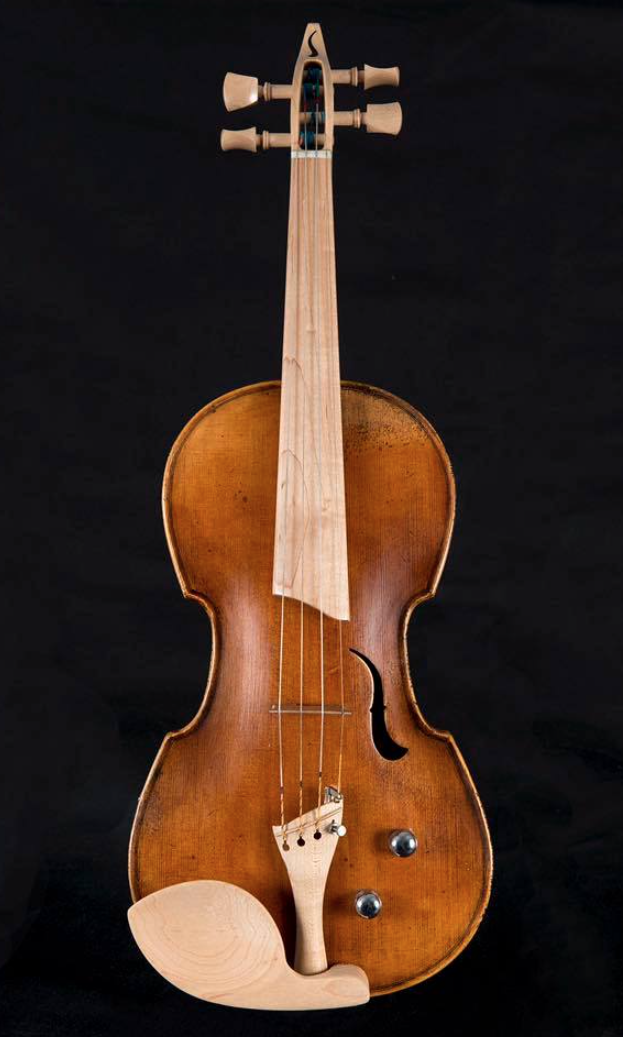
Spur Violins
2015 - Present
A semi-acoustic, semi-hollow body, electric violin, Spur Violins are made by Paul Davies. With a patented sound post pickup system, these semi-hollow body instruments are made with contemporary and traditional materials and construction techniques.
Located in Melbourne, Australia
Models include: Violin: Spur SA251, SA351, EV151, 4-, 5-, 6-string, Spur Baroque Electric Violin
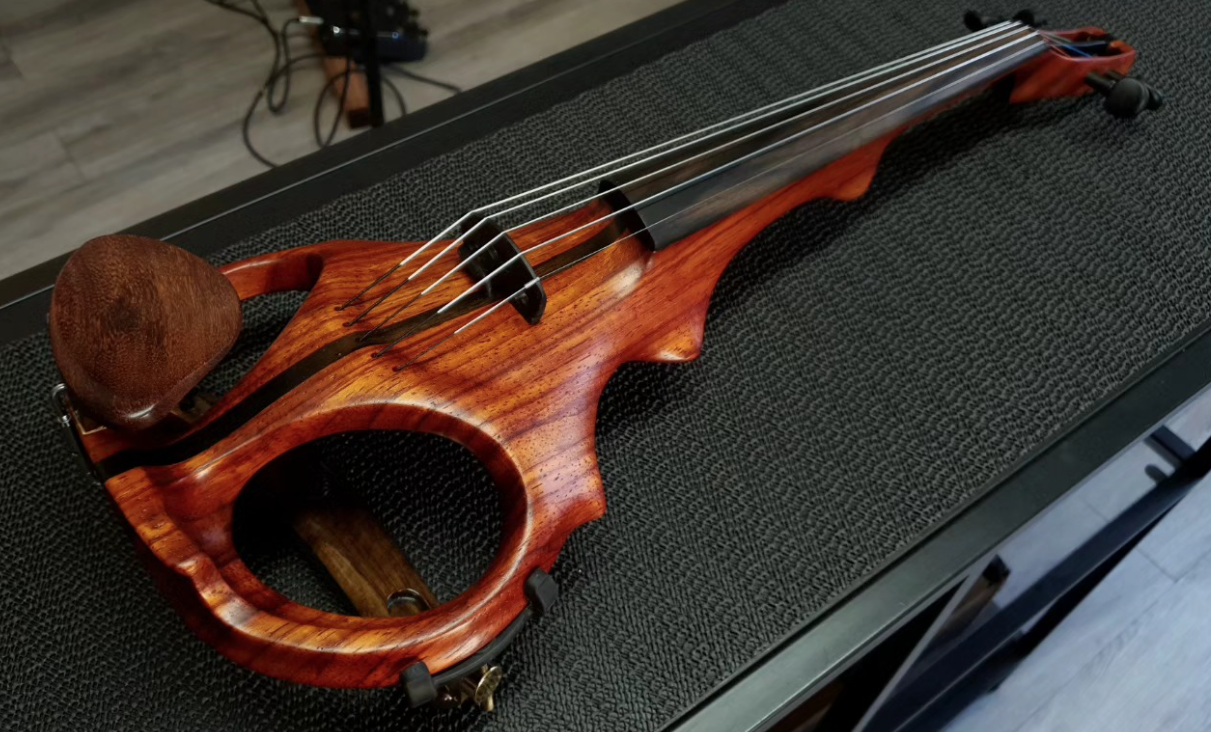
ETJ
2016 - Present
Eric Thomas Jacquin first began making electric violins in 2016. His lightweight violins are made from highly resonant woods, and are designed to play with all the nuances of a traditional violin. They can come with 4, 5, 6, or 7 strings, and are available in standard or baritone range.
Located in Monteux, France
Models include: Violin: 4-String, 4-String Octave, 5-String, 5-String Octave, 6-String, 7-String
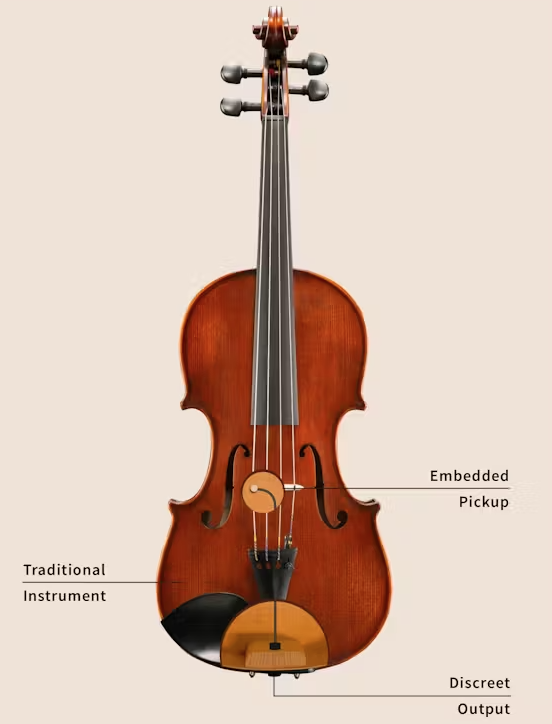
Eastman Series+
2016 - Present
Eastman launched its first electric violin in 2016. The Series+ instruments are designed to look, feel, and sound identical to traditional string instruments, with an integrated pickup system embedded in the top of the instrument and a discrete 3.5 mm jack hidden in the end button.
Models include: Violin: Samuel Eastman Series+, Andreas Eastman Series+, Jean-Pierrre Lupot Series+, Albert Nebel Series+, Rudoulf Doetsch 5-String Series+, Rudoulf Doetsch Series+, Eastman Fiddle Master Series+. Viola: Samuel Eastman Series+, Andreas Eastman Series+, Jean-Pierre Lupot Series+, Albert Nebel Series+, Rudoulf Doetsch 5-String Series+. Cello: Samuel Eastman Series+, Andreas Eastman Series+, Jean-Pierre Lupot Series+, Albert Nebel Series+, 830 Series+, Rudoulf Doetsch Series+
Located in Pomona, California
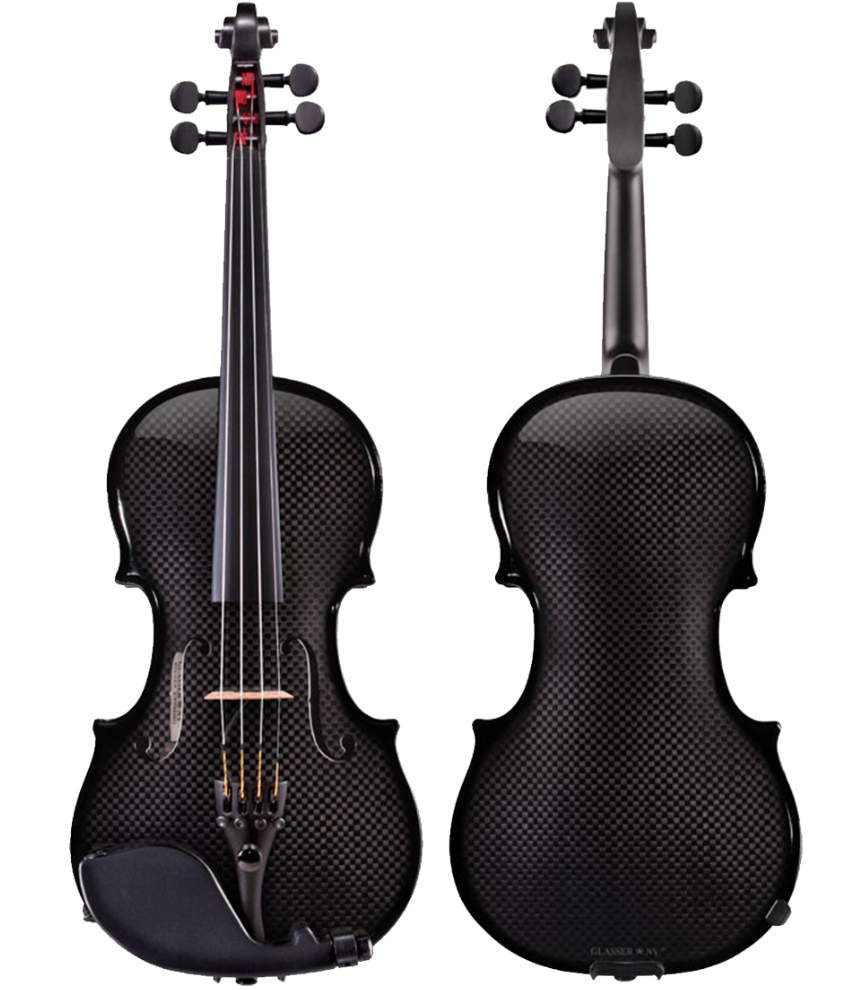
Glasser Acoustic-Electric
2017 - Present
The Glasser Carbon Composite Acoustic Electric violin combines the advanced technology of the acoustic instrument with state of the art electronics by Bartolini. This allows for the instrument to be played either acoustically or plugged into the Glasser Swordtail active chinrest system. The carbon composite body is durable, lightweight, and rich in tone.
Located in Palisades, New York
Models include: Violin: Acoustic-Electric, Acoustic-Electric AEX. Viola: Acoustic-Electric, Acoustic-Electric AEX. Cello: Acoustic-Electric, Acoustic-Electric AEX
Booysenworx
2018 - Present
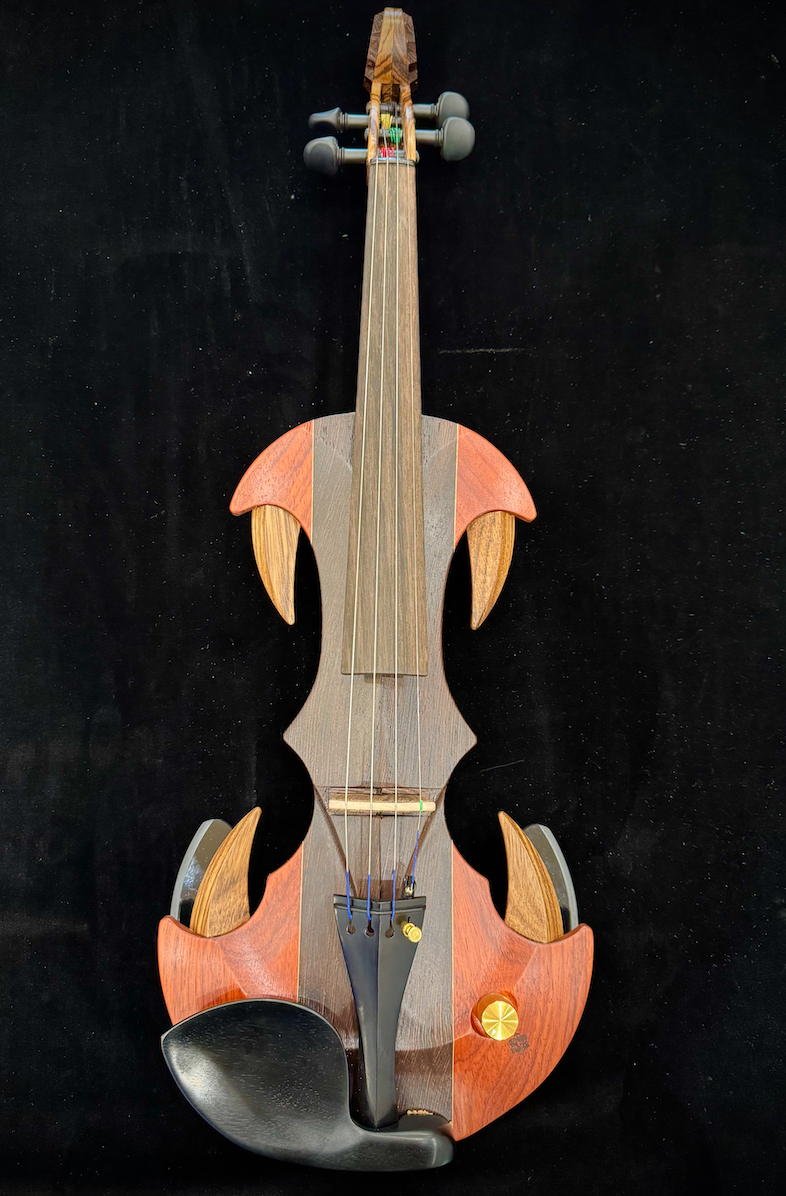
Ben Booysen grew up in South Africa before moving to the United States at 18 years old, where he first started taking violin lessons. He began combining his expertise in guitar making and computer integrated machining in 2018, making his first electric violin prototype. Booysenworx violins feature unique designs and are made from exotic woods such as African Padauk, Wengewood, and Zebrawood.
Located in North Carolina
Models include: Violin: The Neo, The Pumba, The Black Widow, The Nordic
Gewa Novita
2019 - Present
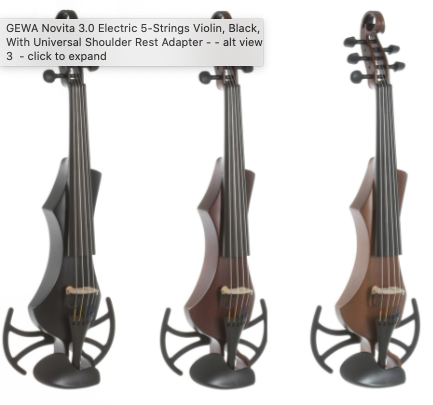
Gewa has been making traditional acoustic violins since 1925. Their history with electric violins is more recent, with the Novita 3.0 being launched in 2019. These instruments feature a traditional construction, with a spruce top, maple back and neck, and an ebony fingerboard, while incorporating an innovative, modern design.
Location Rockville, Maryland
Models include: Violin: Novita 3.0, Novita 3.0 with Universal Shoulder Rest Adapter
Emmett Electric Violins
2020 - Present
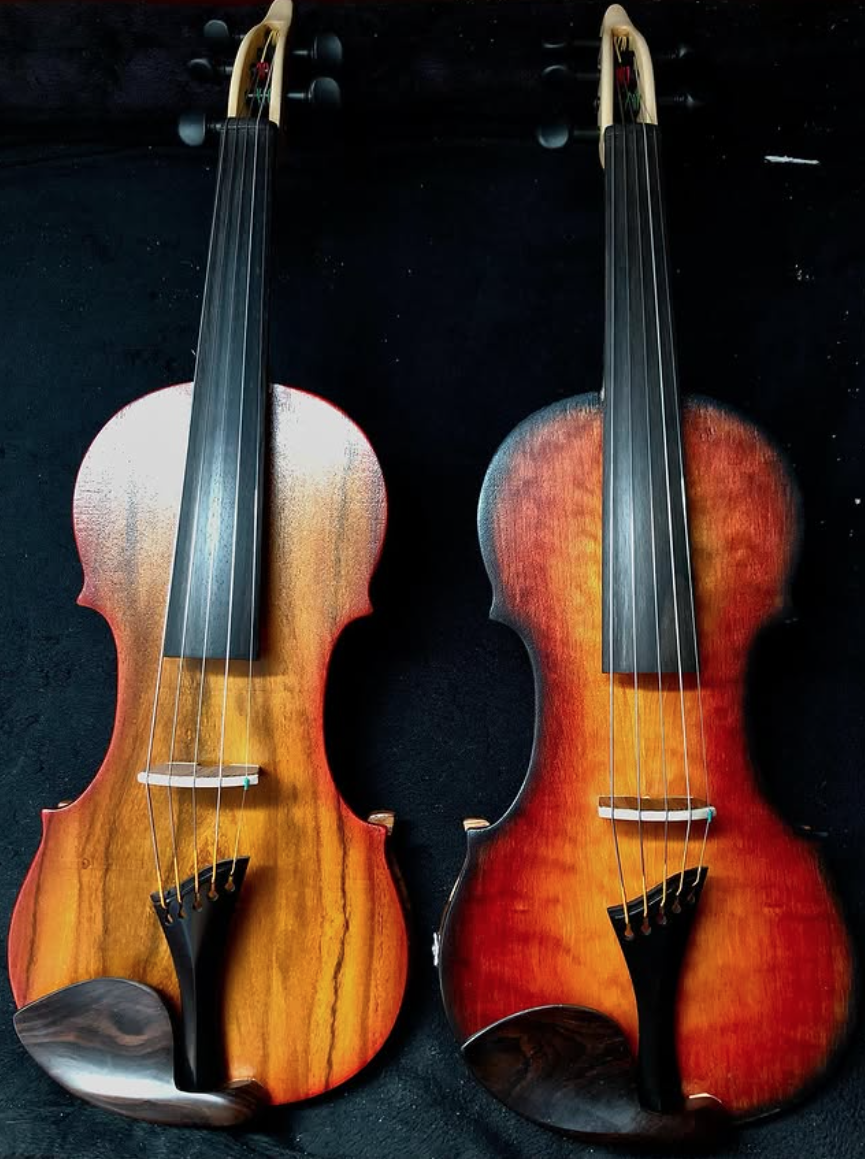
Emmett Violins are made by fiddle player Dan Emmett in North Carolina. His lightweight design is made to have all the physical reference points that an acoustic violin has. Emmett Violins feature a warm tone and an expertly-crafted structure.Emmett Violins are made by fiddle player Dan Emmett in North Carolina. His lightweight design is made to have all the physical reference points that an acoustic violin has. Emmett Violins feature a warm tone and an expertly-crafted structure.
Located in High Point, North Carolina
Models include: Violin 4-string and 5-string
Website: https://www.instagram.com/emmettelectricviolins?igsh=dmYxdmNmN2g3OHl0
3D Varius
2021 - Present
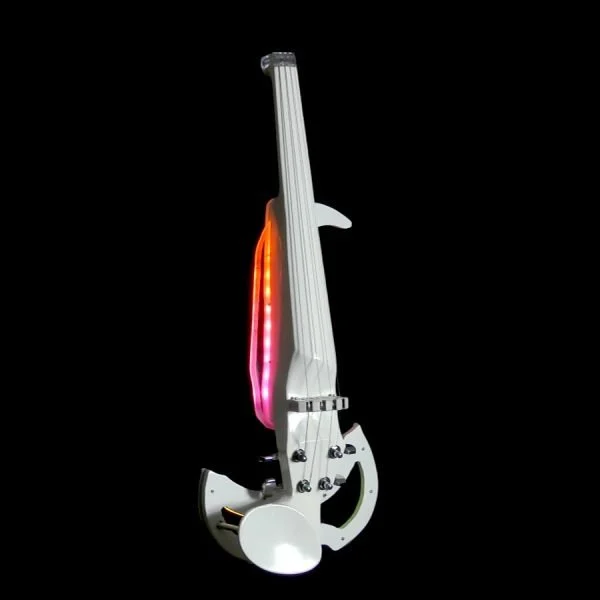
3DVarius was founded in 2012 by violinist and engineer Laurent Bernadac. His violins are created with 3D printing technology, and he is credited with making the first 3D printed violin in 2015.
Located in Southern France (Occitanie region)
Models include: Violin: The Prism, The Line, The Equinox. Cello: The Horizon
Olivar Violins
2021 - Present
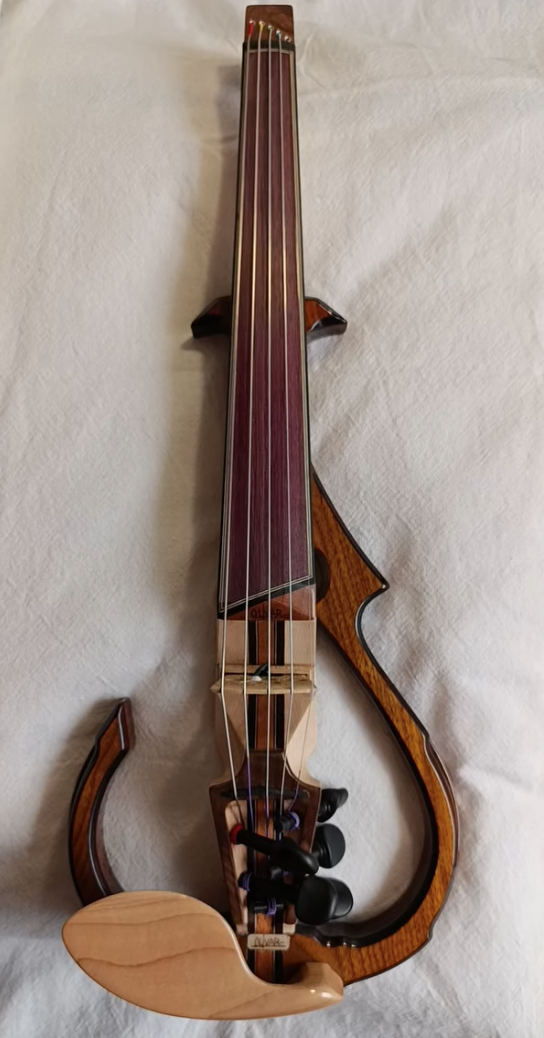
Olivar Violins are made by guitar luther Antonio Benito López. His electric violins feature space-saving geared tuning pegs and a dual pickup system, with a toggle that allows the player to easily switch between the Olivar pickup and the L.R. Baggs pickup.
Located in Toledo, Spain
Models include: Violin: 4-String, 5-String
Strikell
2021 - Present
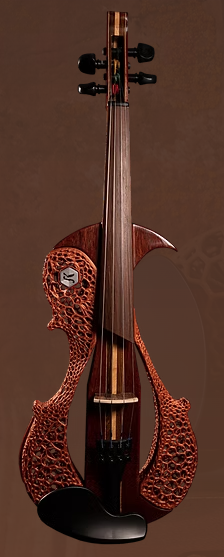
Strikell Violins were introduced to the market in 2021. Their design, which combines the classic wooden violin construction with modern 3D elements, is inspired by the landscapes of Argentina. Strikell is also well-known for the PreVamp, the first preamp designed exclusively for violinists.
Located in Buenos Aires, Argentina
Models include: Violin: Saline, Nature, Volcano, Terra

Volta
2021 - Present
Russian-born classical violinist Marat Gabdullin created the Volta electric violin in 2021. Volta Violins are the first hybrid electric violins with built-in speakers and effects. They offer amplification versatility, being perfect for street or stage performances.
Located in Edmond, Oklahoma
Models include: Violin: Violinatron, EF Effectotron, V-R Violinatron, Violinatron V6RL, Violinatron F5 “Flaxotron,” Violinatron V5-R, Violinatron V4-R, Violinatron V6-R, Lumen 4-String Hollow-Body, Glassertron Carbon Composite Hybrid Electric Violin
Stamos Vlastaris
2022 - Present
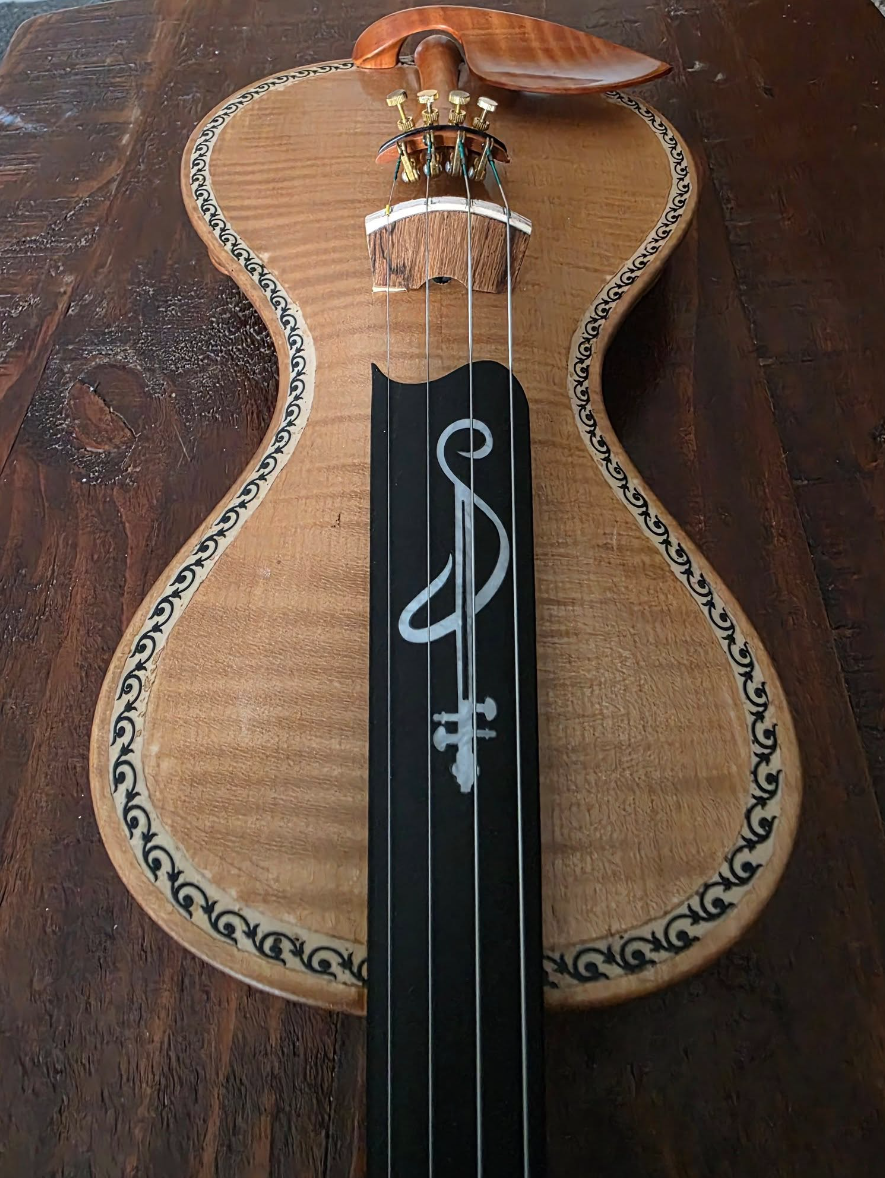
Stamos Vlastaris is an electric violin maker from Athens, Greece. His violins are handmade, come in a variety of colors, and often feature beautifully crafted designs on the fingerboard.
Located in Athens, Greece
Models include: Violin: 4-String
Website: https://www.facebook.com/groups/1451215205160098/user/1482902489/
Sailor Kea
2024 - Present
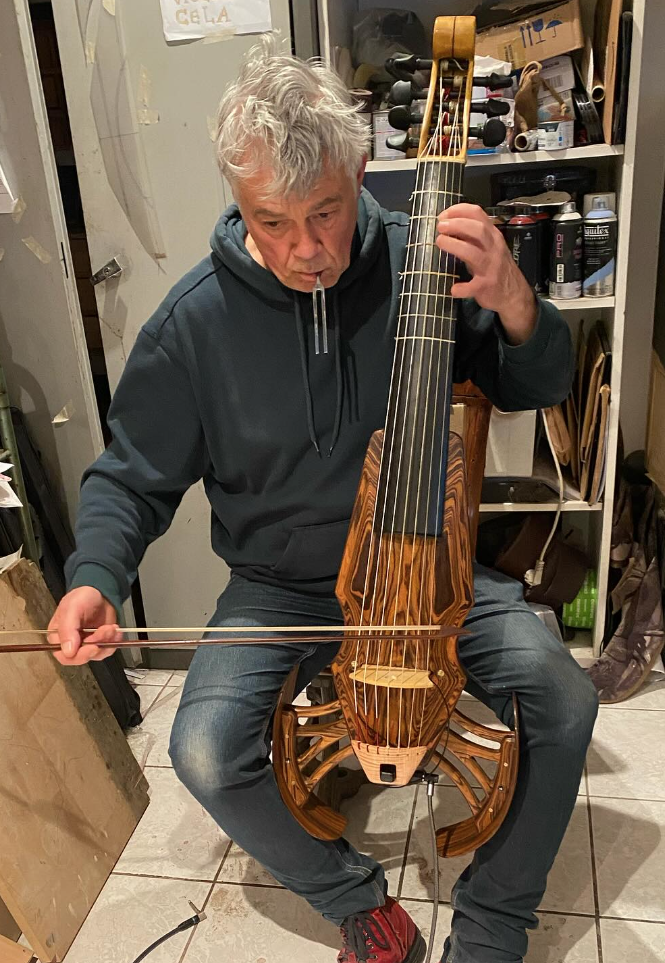
Sailor Kea began experimenting with creating an electric cello in 2024. What resulted was his “Scorpiola,” an electric viola de gamba with removable cleats. The instrument features a portable design and flexible piezos.
Located in Castelnau-Le-Lez, France
Models include: Viola De Gamba: La Scorpiola
Special thanks to Anna Eyink for compiling this information!